
If you ask ten artists for the best tattoo machine brand, you get ten answers. Most of those answers are based on what they trained on, not on a real comparison. This article is the comparison.
I build tattoo machines. I’m not a tattoo artist — I’m an engineer who has spent the last 14 years designing, prototyping and rebuilding rotary and coil machines, including my own brand RightStuff. That means I have an obvious bias (I’ll talk about REVO honestly, but it is my product) and I also have specific opinions about what makes the other brands worth their price, or not.
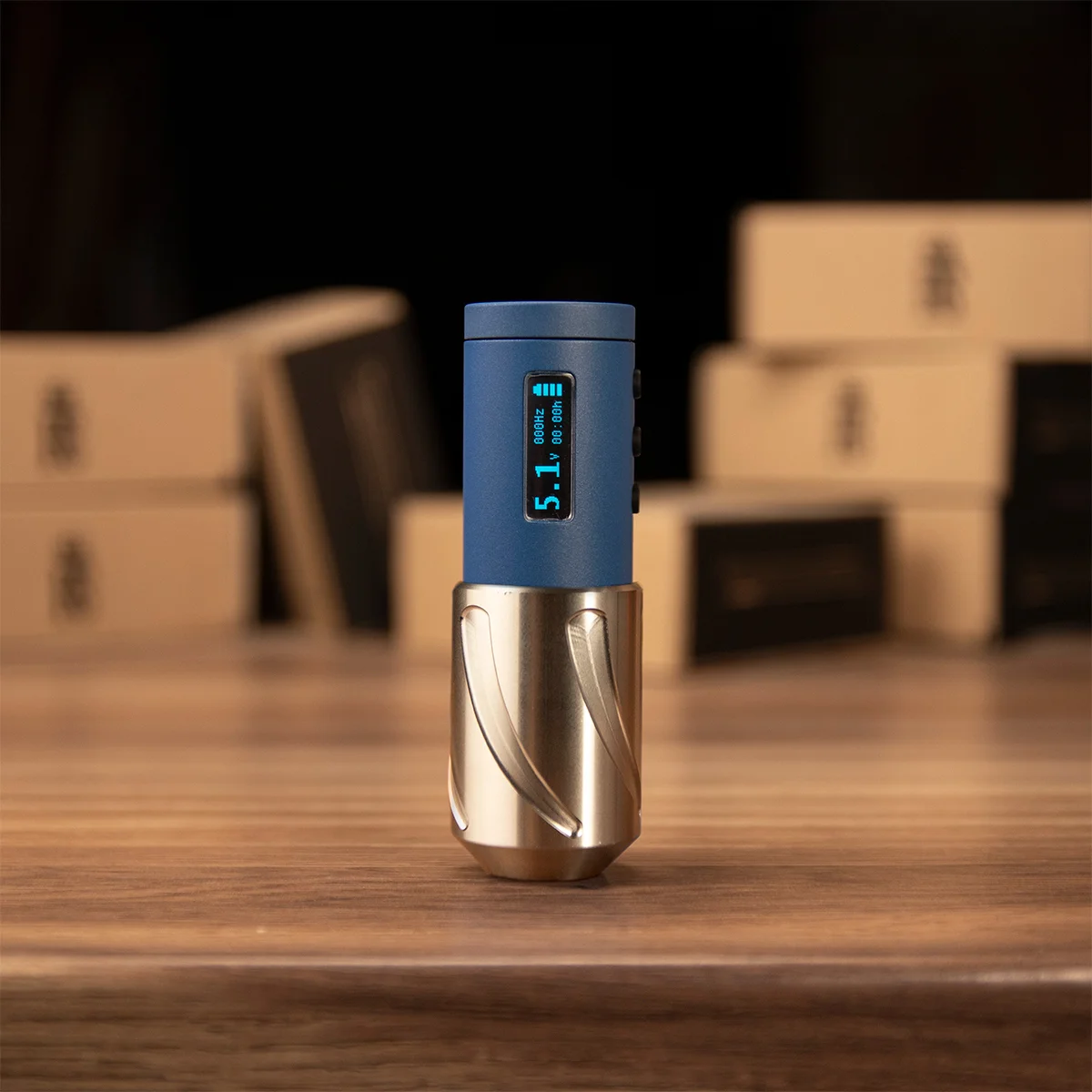
The list below covers the brands I would actually consider in 2026 if I was buying a professional machine today. Skipped: Chinese clones, abandoned brands, and machines being sold under names that no longer represent the original engineering team. Anyone telling you Mast Tour or generic CNC-pen rebrands belong in a “best of” list is either selling them or hasn’t held a real one.
Quick answer
For most working artists in 2026 — FK Irons Spektra Flux, Cheyenne SOL Nova Unlimited II, Bishop Power Wand and the RightStuff REVO are the four wireless pen machines worth comparing seriously. Inkjecta Flite Nano stays relevant for artists who want a corded direct-drive pen. Stigma Chroma Pro covers the mid-budget pro segment well. Dan Kubin sits in its own niche for artists who specifically want machines built around a slider or sidewinder feel. Coil-wise, Workhorse Irons remains the safe American pick.
The right machine depends on what you do, not on what is trending on Instagram. Read on for what each brand is actually good at.
FK Irons — Spektra Flux, Direkt2
Origin: Florida, USA. Founded by Gaston Siciliano.
FK Irons Spektra Flux is the machine that defined the modern wireless pen category. 4mm direct drive rotary, 178g, around 10 hours runtime on the PowerBolt battery, USB-C, Bluetooth pairing with the DarkLab app for voltage and firmware. It is well built, well supported, and the company is responsive on warranty.
What it does well: balanced lining and shading at a single fixed stroke, very clean direct-drive feel, the wireless integration is mature.
What it doesn’t do: stroke is fixed at 4mm, you cannot change it without buying another machine. The DarkLab app dependency annoys some artists who don’t want a phone in the workflow. The motor is a standard direct-drive — there is no proprietary mechanical innovation in the drive itself, which matters or doesn’t matter depending on what you care about.
The Direkt2 is FK’s earlier modular pen. Still a competent machine, but the Flux replaced it for most use cases. If you find a Direkt2 used at a good price, it’s not a bad option.
Buy this if: You want the most mature wireless platform on the market and you only need one stroke.
Cheyenne — SOL Nova Unlimited II, HAWK Pen Unio
Origin: Berlin, Germany. ISO 13485 medical-grade manufacturing.
Cheyenne is the most conservative-engineering brand on this list. Their machines are made to medical-device tolerances, they are quiet, and they are built to last. The SOL Nova Unlimited II is the current wireless flagship: brushless DC motor, 3 stroke options (2.5mm, 3.5mm, 4.5mm), 6+ hour runtime per battery, 2-hour charge time, 4 operating modes including their Steady and Responsive modes.
What it does well: ergonomics and comfort over a long session. Whisper-quiet motor. The Responsive mode adjusts hit frequency to skin resistance, and it works well for color realism. Build quality you can feel.
What it doesn’t do: the price is steep. The grip is only compatible with Cheyenne’s own disposable Ergo grips, which locks you into their ecosystem. Stroke options are limited compared to some competitors. The single-button motion-control interface confuses some artists at first.
The HAWK Pen Unio is the corded equivalent and now the only Cheyenne pen with adjustable stroke. Worth knowing about, but if you want wireless, the SOL Nova Unlimited II is the choice.
Buy this if: You want German-engineering reliability and you tattoo daily for hours at a time. The ergonomics save your hand long-term.
Bishop Rotary — Power Wand Advanced, OG Wand
Origin: Texas, USA. Founded by Franco Vescovi.
Bishop Wand was one of the original premium pen-style machines. The current line is the Power Wand Advanced: three machines with three different fixed strokes — Shader 3.5mm, Packer 4.2mm, Liner 5.0mm. Each uses a Faulhaber motor specifically tuned for that stroke. The new advanced battery sits flush against the machine via a magnetic backplate and runs up to 15 hours on the standard pack, 6 hours on the shorty.
What it does well: the dedicated stroke philosophy. A Bishop Wand Liner with a 5.0mm stroke and a torque-tuned motor is a specialist tool, and it lines like one. The build is American hand-assembled aircraft aluminum. The TFT display on the new advanced battery is genuinely useful.
What it doesn’t do: you need to buy three machines to cover all techniques, which is the brand’s deliberate approach but also its biggest cost issue. Power Wands are heavier than the Flux or REVO. The 5.0mm liner stroke is aggressive — if you don’t have a confident hand, it punishes mistakes.
The OG Wand (the older corded version) is still made and still good. If you don’t need wireless, it is several hundred euros cheaper than the Power Wand setup.
Buy this if: You believe in dedicated machines for dedicated jobs and you can afford to have at least two of them on your worktable.
Inkjecta — Flite Nano
Origin: Sydney, Australia.
Inkjecta Flite Nano is one of the most respected direct-drive pen machines in the world. Hand-assembled, adjustable give via different cams, and a feel that artists describe as “between a coil and a rotary.” Corded.
What it does well: the give-cam system lets you tune mechanical response without buying a new machine. The fit and finish is excellent. The brand has a strong following among black-and-grey realism artists.
What it doesn’t do: it is corded. In 2026, that is a real limitation for an artist working at conventions or guest spots. Inkjecta has wireless options but they are aftermarket battery packs, not as integrated as Flux or REVO. Lead times for new orders can be long.
Buy this if: You work mostly at one studio, you want adjustable mechanical give, and you don’t mind the cord.
Stigma Rotary — Chroma Pro, Beast
Origin: Originally Chinese, now run with international design partners. Wide global distribution.
Stigma occupies a useful position: pro-tier machines at significantly lower prices than FK Irons, Cheyenne, or Bishop. The Chroma Pro is their current flagship pen. The Beast is the older but still-relevant rotary.
What it does well: price-to-performance. For an artist starting their second or third year and needing to upgrade from entry-level kit, Stigma Chroma Pro at around half the price of a Flux is a real option. Build quality has improved significantly over the last 5 years.
What it doesn’t do: long-term resale value. There is no strong second-hand market for Stigma the way there is for FK Irons or Bishop. The brand identity is also less consistent — Stigma has multiple parallel product lines and not all of them are the same quality tier.
Buy this if: You want pro-tier function at mid-tier price, and resale value is not a concern.
Dan Kubin — Sidewinder, Slider
Origin: Minneapolis, USA. Boutique builder.
Dan Kubin makes some of the most distinctive machines in the industry. The Sidewinder is a slider machine, not a pen — it gives you the feedback of a coil with the consistency of a rotary. Limited production, hand-built, and they sell out fast.
What it does well: the feel. Artists who have used a Kubin describe it as a different mechanical conversation than what a pen machine gives you. For traditional tattooing, bold color packing, and old-school work, this is a real tool, not a fashion statement.
What it doesn’t do: availability. You will wait for a Kubin. They are not cheap. They are not pen machines and they don’t pretend to be — if you want a pen, this isn’t it.
Buy this if: You tattoo in a style that benefits from slider/sidewinder feel and you can wait for an order to be filled.
RightStuff — REVO and REVO SHOT
Origin: Wrocław, Poland. Founded by me, Oleg Mozhey, in 2012 in Belarus and rebuilt in Poland after 2020.
I will keep this section honest because the rest of the article is honest. Read it knowing this is my product.
REVO is a wireless pen machine built around K-PULSE™, a drive system I spent 2.5 years and 50+ prototypes developing. Utility patent filed. The drive is not direct drive and not swash plate — it is its own category. Five stroke options at order: 3.2, 3.5, 3.8, 4.2, 4.7mm. 2,600 mAh battery, up to 12 hours runtime, 10,000 RPM motor, voltage 3–7V preferred. Aluminum body, 170g standard. €700 starting price for the standard alu-grip configuration, €765 for color-customized with steel grip.
The REVO SHOT is the compact version — 15mm shorter, 1,600 mAh battery (ships with two), same K-PULSE drive. €650.
What it does well — based on artist feedback, not my own claims:
- Holds stroke under heavy load. Big magnums (15M, 18RL), greywash, and color packing don’t choke the way they do on some other wireless pens. This is the K-PULSE Magnetic Preload doing its job.
- The GIVE Switch — a mechanical mode change between two distinct feels, activated by holding both buttons for 2 seconds. GIVE ON is concentrated hit for lining and detail. GIVE OFF is sustained push for packing and magnums. One machine, two mechanical behaviors.
- Five stroke options at order, choose what fits your work.
- European hand assembly, direct manufacturer support.
What it doesn’t do:
- Stroke is set at order and not field-changeable. If you need to switch strokes, you order a different machine.
- It is not the lightest machine on this list. 170g is competitive but the Flux at 178g and Sol Nova at 152g (without battery) are similar or lighter.
- We are not the marketing-budget brand. You will not see REVO at every convention. You will not see paid Instagram ads. Discovery is mostly through artist word-of-mouth, which is slow.
Buy this if: You want a wireless pen with five stroke options, two mechanical feel modes in one machine, and you care about the engineering more than the marketing.
You can read the full REVO product page here and the K-PULSE™ technology page here.
Coil machine brands — Workhorse Irons, Soba Custom Irons
If you tattoo coil machines, the wireless conversation above doesn’t apply to you. Coil is a different tool, used for different reasons: traditional and old-school work, dense color packing in a specific style, and artists who want the mechanical feel that no rotary can replicate.
Workhorse Irons (USA) is the most dependable coil brand on the market in 2026. Their machines are built by tattooers for tattooers, the warranty is real, and they hold value.
Soba Custom Irons (USA) is more boutique, longer wait times, but the tuning is excellent. If you want a coil tuned to your hand, this is one of the few builders left who will do it.
I also build coil machines under RightStuff — THE MiniDozzer and THE ONE. They are not the focus of the brand, but they are part of the range and built with the same precision tolerances as the rotary line.
How to actually choose
Three questions answered honestly will get you to the right machine faster than any review:
1. What do you tattoo most?
- Lining-heavy work, fine detail, realism: 3.5–3.8mm stroke, Cheyenne SOL Nova 3.5, REVO 3.5/3.8, FK Flux 4mm, or Bishop Wand Shader.
- Mixed lining and shading: 3.8–4.2mm, REVO 3.8/4.2, Bishop Wand Packer, FK Flux.
- Bold lining, large color packing, traditional: 4.7–5.0mm, Bishop Wand Liner, REVO 4.7, Cheyenne SOL Nova 4.5.
2. Wireless or corded? Most working artists in 2026 want wireless. The cord is the single biggest workflow improvement of the last decade. If you guest-spot, do conventions, or just want a cleaner workspace, wireless. If you work at one station every day and you have a power supply you trust, corded is still cheaper and reliable.
3. What’s your budget actually like? Pro-tier wireless pen machines all sit between €650 and €900. If you are looking at machines under €300, you are not on this list — those are entry-level or clones. If your budget is €1,000+, you are probably comparing two pro-tier machines, not one. That is fine. Most working artists own multiple machines.
What you don’t need to worry about
- Brand prestige. Nobody walks into a tattoo studio and asks what brand of machine you use. The result on the skin is what they care about.
- Apps and Bluetooth. Useful for some artists, irrelevant to most. None of the actual mechanical performance comes from the app.
- “Patented” claims. Patent filings don’t equal better tattoos. Ask what the patent is actually for. (For K-PULSE™, the patent is for the magnetic stabilization and acceleration recess in the drive — but that means something only because it changes how the stroke behaves under load, not because it has a patent number.)
What’s the best tattoo machine brand for beginners in 2026?
For a beginner who is past the absolute starter-kit phase, the Stigma Chroma Pro or a used FK Irons Spektra Flux are reasonable first pro machines. RightStuff REVO with a 3.8mm stroke is also a versatile starter for someone who plans to grow into both lining and shading. Avoid no-name Chinese pens at this stage even if the price tempts you — bad mechanical feedback teaches bad technique.
What’s the most reliable tattoo machine brand?
Cheyenne, by a margin. Their ISO 13485 medical-grade manufacturing standards and German build quality mean lower failure rates over a 5-year machine lifetime than any other brand on this list. FK Irons is second. Bishop and RightStuff are close behind, both offering direct manufacturer support.
Are American tattoo machines better than European ones?
The geography is irrelevant. Manufacturing standards, motor quality, and drive engineering are what matter. American brands like FK Irons and Bishop are excellent. German brands like Cheyenne are excellent. Polish-made RightStuff is excellent. Country of origin tells you about supply chain and warranty logistics, not about quality.
Why are professional tattoo machines so expensive?
A pro pen machine costs €650–€900 because of CNC-machined precision frames, brushless DC motors with custom windings, tight assembly tolerances under ±0.01mm, and direct manufacturer warranty support. Cheap machines skip all of this. For a tool used 6–8 hours a day, the difference is felt in your hand by the end of the session.
Is FK Irons or Cheyenne better?
Different strengths. FK Irons Flux is more mature on the wireless side and has the DarkLab app ecosystem. Cheyenne SOL Nova Unlimited II has better ergonomics, quieter operation, and the responsive-mode tuning. If you tattoo color realism or do long shading sessions, Cheyenne. If you want one wireless machine that does both lining and shading well at a single stroke, Flux.
What machine does [insert famous artist] use?
This question is worth less than you think. Famous artists use multiple machines, sometimes get sponsored by brands, and develop technique that compensates for the machine they have. The machine that suits your hand is the one you should buy, not the one your favorite artist posts on Instagram.
Which tattoo machine brand has the longest warranty?
Cheyenne offers 24 months on most pen machines. Bishop, FK Irons, and RightStuff all offer 12 months on the machine, with longer terms on certain components. Real warranty is less about the term and more about the manufacturer’s responsiveness — RightStuff handles warranty directly with no intermediary, which matters if something goes wrong.
Is a wireless pen machine better than a coil machine?
Different tools for different work. A wireless pen is more versatile and more comfortable for most modern styles. A coil machine has a mechanical feel that no rotary fully replicates and is preferred for traditional, old-school, and certain color-packing styles. Many professional artists own both.
RightStuff Tattoo Machines is based in Wrocław, Poland. We design, hand-assemble and ship the REVO wireless tattoo machine and the full RightStuff range directly from Europe. K-PULSE™ utility patent filed.
Browse the full RightStuff range at rightstuff.eu — REVO, REVO SHOT, K-PULSE™.

 English
  Deutsch
  Polski
  Français
  Italiano
  Español