
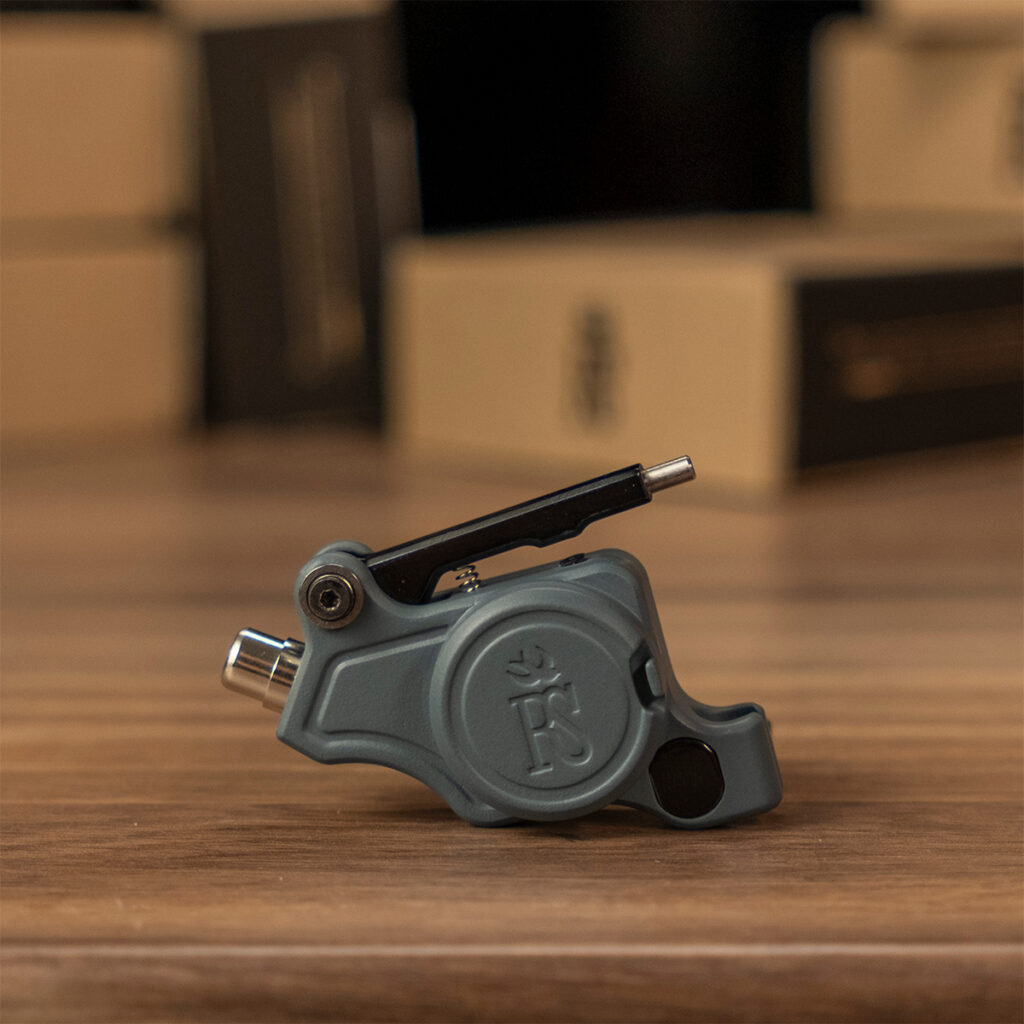
Ręcznie wykonana maszynka rotacyjna do tatuażu to maszynka przewodowa, montowana i regulowana ręcznie, a nie produkowana masowo na linii fabrycznej. Różnica jest odczuwalna w działaniu: węższe tolerancje, silnik dopasowany do ramy oraz możliwość serwisowania maszynki przez osobę, która ją zbudowała. W tym artykule omówiono gamę przewodowych maszyn rotacyjnych RightStuff — CROSS, KEG Variable, KEG Slide, RE:verse i Shim — wraz z rzeczywistymi parametrami technicznymi, przeznaczeniem każdej z nich oraz wskazówkami, jak wybrać odpowiedni model. Ceny zaczynają się od 170 euro.
To ja konstruuję te maszyny. Nie jestem tatuażystą — jestem inżynierem, który od ponad dziesięciu lat zajmuje się projektowaniem, tworzeniem prototypów i przebudową maszyn rotacyjnych, a każda maszyna RightStuff jest ręcznie montowana we Wrocławiu w Polsce. To sprawia, że mam oczywiste przywiązanie do własnej pracy, a także oznacza, że mogę dokładnie powiedzieć, do czego każda maszyna się nadaje, a do czego nie, ponieważ to ja podjąłem decyzje, które o tym zadecydowały.
Co właściwie oznacza określenie “ręcznie wykonane” w przypadku maszyny obrotowej?
To termin, który bywa nadużywany, więc oto jego prawdziwa definicja. W przypadku rowerów rotacyjnych RightStuff określenie „ręcznie wykonany” oznacza, że rama jest obrabiana metodą CNC z aluminium, a następnie każdy egzemplarz jest ręcznie montowany, dopasowywany i testowany przed wysyłką. Silnik jest dopasowywany do ramy. Łożyska i sprężyny są sprawdzane pojedynczo. Żaden egzemplarz nie opuszcza zakładu, dopóki nie działa tak, jak powinien.
To całkowite przeciwieństwo sposobu działania dużych marek fabrycznych i właśnie o to chodzi. FK Irons, Cheyenne i Bishop to doskonałe maszyny, ale są produkowane na dużą skalę — nie da się ręcznie dostroić dziesięciu tysięcy egzemplarzy. Ręcznie wykonana maszyna zamienia tę skalę na indywidualną dbałość o szczegóły. W przypadku maszyn rotacyjnych z napędem elektrycznym, gdzie wrażenia mechaniczne są najważniejsze, właśnie za tę dbałość płacisz.
Dlaczego w 2026 roku warto wybrać obrotową mysz przewodową zamiast bezprzewodowej?
Obecnie w branży tatuażu najwięcej mówi się o piórach bezprzewodowych. O maszynach rotacyjnych z przewodem mówi się mniej, ale nie są one przestarzałe — stanowią one świadomy wybór z konkretnych powodów:
- Zasilanie bezpośrednie, bez konieczności dbania o baterię. Przewodowa maszynka obrotowa jest zasilana ze źródła prądu o stabilnym napięciu przez cały czas trwania sesji tatuażu. Nie trzeba jej ładować, nie ma ciężaru baterii ani obaw o czas pracy podczas długich sesji.
- Lżejszy w dłoni. Bez wbudowanego akumulatora przewodowy regulator obrotowy może być naprawdę lekki — model KEG Slide waży 120 gramów, a KEG Variable 140 gramów. To ma znaczenie podczas całodziennego użytkowania.
- Niższe koszty rozpoczęcia działalności. Cena ręcznie wykonanego pióra obrotowego z przewodem zaczyna się od 170 euro. Profesjonalne pióro bezprzewodowe kosztuje około 650 euro. Jeśli chcesz mieć ręcznie wykonane pióro bez dopłaty za wersję bezprzewodową, to jest to najlepszy wybór.
- Uczciwość mechaniczna. Przewodowy rysik obrotowy zapewnia bezpośredni mechaniczny związek między silnikiem, skokiem igły a skórą. Wielu doświadczonych artystów preferuje tę bezpośredniość podczas rysowania konturów i wykonywania detali.
Jeśli zależy Ci właśnie na wersji bezprzewodowej, warto raczej zwrócić uwagę na model REVO — jest on wyposażony w system napędowy K-PULSE™ i stanowi zupełnie inną kategorię narzędzi. Zapoznaj się z naszym przewodnikiem po najlepsza bezprzewodowa maszynka do tatuażu w 2026 roku aby zapoznać się z pełnym porównaniem.
Seria ręcznie wykonanych obrotowych produktów RightStuff
CROSS — model uniwersalny (510 €)
CROSS to urządzenie, które zbudowało renomę marki. Jest to ręcznie wykonana hybrydowa wiertarka obrotowa z złączem RCA, wycięta z aluminium, ważąca 70 gramów. Pracuje z prędkością do 10 000 obrotów na minutę przy optymalnym napięciu 5–8 V i jest dostępna w wersjach o skoku 3,8 mm lub 4,5 mm.
W czym się wyróżnia: wszechstronność i wykończenie. Skok pióra wynoszący 3,8 mm pozwala na rysowanie konturów i cieniowanie; skok 4,5 mm nadaje się raczej do bardziej wyrazistych prac i wypełniania powierzchni. Jakość wykonania oraz szeroki wybór wykończeń sprawiają, że artyści wciąż do niego wracają.
Czego nie robi: Skok jest ustalony na poziomie odpowiadającym zamówionej wersji — wybierasz z góry 3,8 lub 4,5 mm i nie można go zmieniać w trakcie jazdy. Jeśli zależy Ci na regulowanym skoku, zapoznaj się z modelem KEG Variable poniżej.
Kup to, jeśli: szukasz niezawodnego, pięknie wykończonego, ręcznie wykonanego urządzenia obrotowego, które sprawdzi się w większości zadań, które wykonujesz. Zobacz KRZYŻ →
KEG Variable — regulowany skok (270 €)
KEG Variable to niestandardowy silnik obrotowy z napędem bezpośrednim i regulowanym skokiem w zakresie od 1 mm do 5 mm, co oznacza, że jedno urządzenie może służyć jako liner, shader lub color packer – w zależności od ustawienia. Aluminiowa rama sprawia, że waży zaledwie 140 gramów. Wykorzystuje ona specjalnie zaprojektowany silnik, dostępny wyłącznie w tej serii, pracujący przy napięciu 6–13 V i prędkości obrotowej 8 000 obr./min.
W czym się wyróżnia: Elastyczność. Najważniejszą cechą jest regulowany skok w zakresie 1–5 mm — nie jesteś ograniczony do jednego zadania. Dla artysty, który poszukuje jednej, wszechstronnej maszyny, jest to najlepszy wybór w tej serii.
Czego nie robi: wymaga delikatnego podejścia. Jest to maszyna stworzona przez profesjonalistów dla profesjonalistów, a możliwość regulacji oznacza, że musisz zrozumieć, jak długość skoku wpływa na efekt Twojej pracy. Nie jest to najłatwiejszy punkt wyjścia dla początkujących.
Kup to, jeśli: chcesz mieć jedną maszynę, która obsługuje rysowanie konturów, cieniowanie i wypełnianie, i wiesz, jak ją odpowiednio ustawić. Zobacz zmienną KEG →
KEG Slide — specjalista od lekkości (170 €)
Model KEG Slide to najlżejsza i najtańsza maszyna w tej serii — waży 120 gramów i kosztuje 170 euro. Wykorzystuje mechanizm suwakowy — łożysko napędza sworzeń, a sprężyna powrotna zapewnia płynny ruch, gwarantując stabilny skok wynoszący 3,6 mm. Urządzenie pracuje z prędkością 8 000 obrotów na minutę przy napięciu 6–13 V.
W czym się wyróżnia: płynny, równomierny ruch przy niewielkiej wadze i niskiej cenie. Odczucie podczas przesuwania różni się od tego w modelu z napędem obrotowym z napędem bezpośrednim — jest łagodniejsze i bardziej wyrozumiałe podczas powrotu. Za 170 euro to najprostszy sposób na zakup prawdziwie ręcznie wykonanej maszyny.
Czego nie robi: Ma stały skok wynoszący 3,6 mm, więc nie jest to maszyna uniwersalna. To raczej specjalista, który dobrze wykonuje swoje zadania, a nie urządzenie o szerokim zakresie zastosowań.
Kup to, jeśli: szukasz niedrogiego, lekkiego, ręcznie wykonanego slidera, który zapewnia miękkość i spójność w dotyku. Zobacz slajd KEG →
RE:verse — nowoczesny taczek (350 €)
RE:verse to najnowszy model z serii urządzeń przewodowych. Posiada aluminiową obudowę, wbudowany uchwyt na kabel oraz złącze RCA, dzięki czemu współpracuje z każdym standardowym zasilaczem. Urządzenie jest napędzane 3-biegunowym silnikiem prądu stałego, który zapewnia płynniejszą i cichszą pracę niż prostsze silniki, a w zestawie znajdują się zapasowe sprężyny oraz zestaw zapasowych pierścieni uszczelniających typu O-ring.
W czym się wyróżnia: Płynna, cicha i nowoczesna praca, a do tego urządzenie zaprojektowano z myślą o łatwej konserwacji — zapasowe sprężyny i o-ringi w zestawie świadczą o tym, że zostało stworzone z myślą o długiej eksploatacji. Nadaje się do wszystkich stylów tatuażu.
Czego nie robi: Jest to urządzenie przewodowe, więc obowiązuje tu ten sam kompromis między wersją bezprzewodową a przewodową. Jeśli przewód stanowi przeszkodę w Twoim sposobie pracy, to nie jest to urządzenie dla Ciebie.
Kup to, jeśli: szukasz nowoczesnej, cichej i niewymagającej konserwacji obrotowej maszyny przewodowej w średnim przedziale cenowym. Zobacz RE:verse →
Shim — obrotowa kasetowa (520 €)
Shim to ręcznie wykonana maszynka obrotowa z wkładem, stworzona z myślą o doświadczonych artystach. Jest dostępna z wymiennymi krzywkami (opcje 3,0 mm, 3,5 mm i 4,0 mm), co pozwala zmieniać długość pociągnięcia poprzez wymianę krzywki; ponadto zapewnia płynną pracę podczas wykonywania tatuaży.
W czym się wyróżnia: układ krzywkowy. Zakup innej krzywki jest tańszy niż zakup innej maszyny, więc Shim zapewnia elastyczność skoku dzięki częściom, a nie dzięki układom elektronicznym.
Czego nie robi: Jest przeznaczona dla doświadczonych artystów, którzy już wiedzą, jaki rodzaj pociągnięcia chcą uzyskać i dlaczego. Nie jest to urządzenie, na którym można nauczyć się podstaw.
Kup to, jeśli: szukasz ręcznie wykonanego wiertarki kartridżowej z regulacją skoku za pomocą wymiennych krzywek. Zobacz Shim →
Szybkie porównanie
| Maszyna | Udar | Waga | Napięcie | Połączenie | Cena od |
|---|---|---|---|---|---|
| KEG Slide | 3,6 mm stałe | 120 g | 6–13 V | RCA | €170 |
| Zmienna KEG | regulacja w zakresie 1–5 mm | 140 g | 6–13 V | RCA | €270 |
| RE:verse | naprawiono | aluminium | standardowy zasilacz | RCA | €350 |
| CROSS | 3,8 lub 4,5 mm | 70 g | 5–8 V | RCA | €510 |
| Podkładka | Krzywki 3,0 / 3,5 / 4,0 mm | aluminium | standardowy zasilacz | wkład | €520 |
Jak wybrać odpowiednią ręcznie wykonaną tarczę obrotową
Jeśli szukasz urządzenia, które się dostosowuje: Regulacja KEG. Skok regulowany w zakresie 1–5 mm pozwala na rysowanie konturów, cieniowanie i wypełnianie za pomocą jednego narzędzia.
Jeśli zależy Ci na najlepszym, wszechstronnym wykończeniu i wrażeniach dotykowych: CROSS. Nie bez powodu jest to flagowy model z serii urządzeń przewodowych.
Jeśli masz ograniczony budżet lub szukasz specjalisty od oświetlenia: Suwak KEG za 170 euro, waga 120 gramów.
Jeśli szukasz nowoczesnego, cichego i niewymagającego dużego nakładu pracy rozwiązania: RE:verse.
Jeśli pracujesz z kartridżami i zależy Ci na elastyczności skoku opartej na krzywkach: Podkładka.
Jeśli wykonujesz tatuaże przy użyciu maszyn cewkowych, dyskusja na temat maszyn przewodowych i rotacyjnych nie dotyczy Ciebie — maszyna cewkowa to inne narzędzie przeznaczone do innych zadań. Tę kwestię omawiamy osobno w nasz przewodnik po ręcznie wykonanych maszynkach do tatuażu typu coil.
Każda maszyna jest serwisowana przez osoby, które ją skonstruowały
To właśnie ten aspekt, którego nie da się ująć w specyfikacji technicznej. Ponieważ każda wiertarka obrotowa RightStuff jest montowana ręcznie we Wrocławiu, serwisem zajmuje się ten sam zespół, który zbudował Twoją maszynę. Nie ma żadnych pośredników, żadnego działu zwrotów w innym kraju, żadnego “przekażemy to producentowi”. Jeśli coś pójdzie nie tak, urządzenie wraca do nas i my je naprawiamy. W przypadku narzędzia, z którego korzystasz na co dzień, ten bezpośredni kontakt ma większe znaczenie niż większość działań marketingowych.
Najczęściej zadawane pytania
Czym jest ręcznie wykonana maszynka obrotowa do tatuażu?
Ręcznie wykonana maszynka rotacyjna do tatuażu to maszynka przewodowa, która jest montowana, regulowana i testowana ręcznie, a nie produkowana masowo. Rama jest zazwyczaj obrabiana na maszynach CNC, a następnie każda maszyna jest indywidualnie dostrajana — silnik jest dopasowywany do ramy, a łożysko i sprężyna sprawdzane — przed wysyłką. Efektem są węższe tolerancje i bardziej spójne wrażenia mechaniczne w porównaniu z produkcją fabryczną.
Czy ręcznie wykonane maszyny obrotowe są lepsze od maszyn fabrycznych?
Różnią się one od siebie. Marki fabryczne, takie jak FK Irons i Cheyenne, oferują skalę produkcji, sprawdzone wsparcie techniczne i niezawodność. Maszyny wykonywane ręcznie rezygnują z tej skali na rzecz indywidualnego podejścia i bezpośredniej obsługi ze strony producenta. W przypadku maszyn rotacyjnych z przewodem, gdzie wrażenia mechaniczne mają kluczowe znaczenie, wielu doświadczonych artystów preferuje efekt ręcznego dostrojenia. Żadna z tych opcji nie jest uniwersalnie lepsza — wszystko zależy od tego, co jest dla Ciebie ważne.
Ile kosztuje ręcznie wykonana maszynka obrotowa do tatuażu?
Ceny ręcznie wykonanych rysików obrotowych marki RightStuff zaczynają się od 170 euro za model KEG Slide, 270 euro za regulowany model KEG Variable, 350 euro za model RE:verse, 510 euro za model CROSS oraz 520 euro za model Shim z wkładem. To znacznie mniej niż w przypadku profesjonalnego pióra bezprzewodowego, którego cena zaczyna się od około 650 euro, ponieważ w cenie nie ma baterii, ładowarki ani elektroniki bezprzewodowej.
Jaka jest różnica między napędem bezpośrednim a napędem obrotowym typu slider?
W mechanizmie obrotowym z napędem bezpośrednim ruch obrotowy silnika przekształca się bezpośrednio w ruch igły, zapewniając pewne i natychmiastowe wyczucie — tak właśnie działa model KEG Variable. W mechanizmie obrotowym typu slider łożysko napędza sworzeń, który przesuwa się po sprężynie powrotnej, zapewniając łagodniejszy i bardziej wyrozumiały powrót — tak właśnie działa model KEG Slide. Napęd bezpośredni zapewnia większe poczucie połączenia; mechanizm typu slider zapewnia płynniejszą pracę.
Czy można zmienić grubość pociągnięcia w obrotowej maszynce do tatuażu?
To zależy od maszyny. Model KEG Variable ma regulowany skok w zakresie od 1 mm do 5 mm, który można ustawić samodzielnie. W modelu Shim skok zmienia się poprzez wymianę krzywek (3,0; 3,5 lub 4,0 mm). W modelu CROSS skok jest stały i odpowiada zamówionej wartości (3,8 lub 4,5 mm). W maszynach o stałym skoku nie można go zmienić bez wymiany części.
Czy ręczne maszyny obrotowe działają przy dowolnym źródle zasilania?
Tak. Maszynki przewodowe RightStuff są wyposażone w standardowe złącze RCA i współpracują z każdym standardowym zasilaczem do tatuażu, dzięki czemu można dostosować napięcie do igły i wykonywanej pracy. Model CROSS działa najlepiej przy napięciu 5–8 V; maszynki KEG działają przy napięciu 6–13 V.
Czy urządzenia RightStuff są kompatybilne z igłami do wkładów?
Model Shim to maszyna obrotowa z wkładem, zaprojektowana specjalnie z myślą o systemach igieł wkładowych. Pozostałe maszyny obrotowe z tej serii są dostępne w wersjach dostosowanych do różnych konfiguracji igieł — przed złożeniem zamówienia sprawdź dokładną konfigurację na stronie danego produktu.
Gdzie produkowane są maszyny obrotowe RightStuff?
Każda maszyna obrotowa marki RightStuff jest ręcznie montowana we Wrocławiu w Polsce. Ten sam zespół, który zajmuje się montażem maszyn, zapewnia również ich serwis bezpośrednio, bez pośredników.
Przejrzyj pełną ofertę ręcznie wykonanych noży obrotowych
Pełna oferta obrotowych urządzeń przewodowych — CROSS, KEG Variable, KEG Slide, RE:verse i Shim — jest dostępna bezpośrednio u RightStuff, ręcznie montowane i wysyłane z Europy. Informacje na temat bezprzewodowych urządzeń K-PULSE™ można znaleźć w REVO.

 English
  Deutsch
  Polski
  Français
  Italiano
  Español