
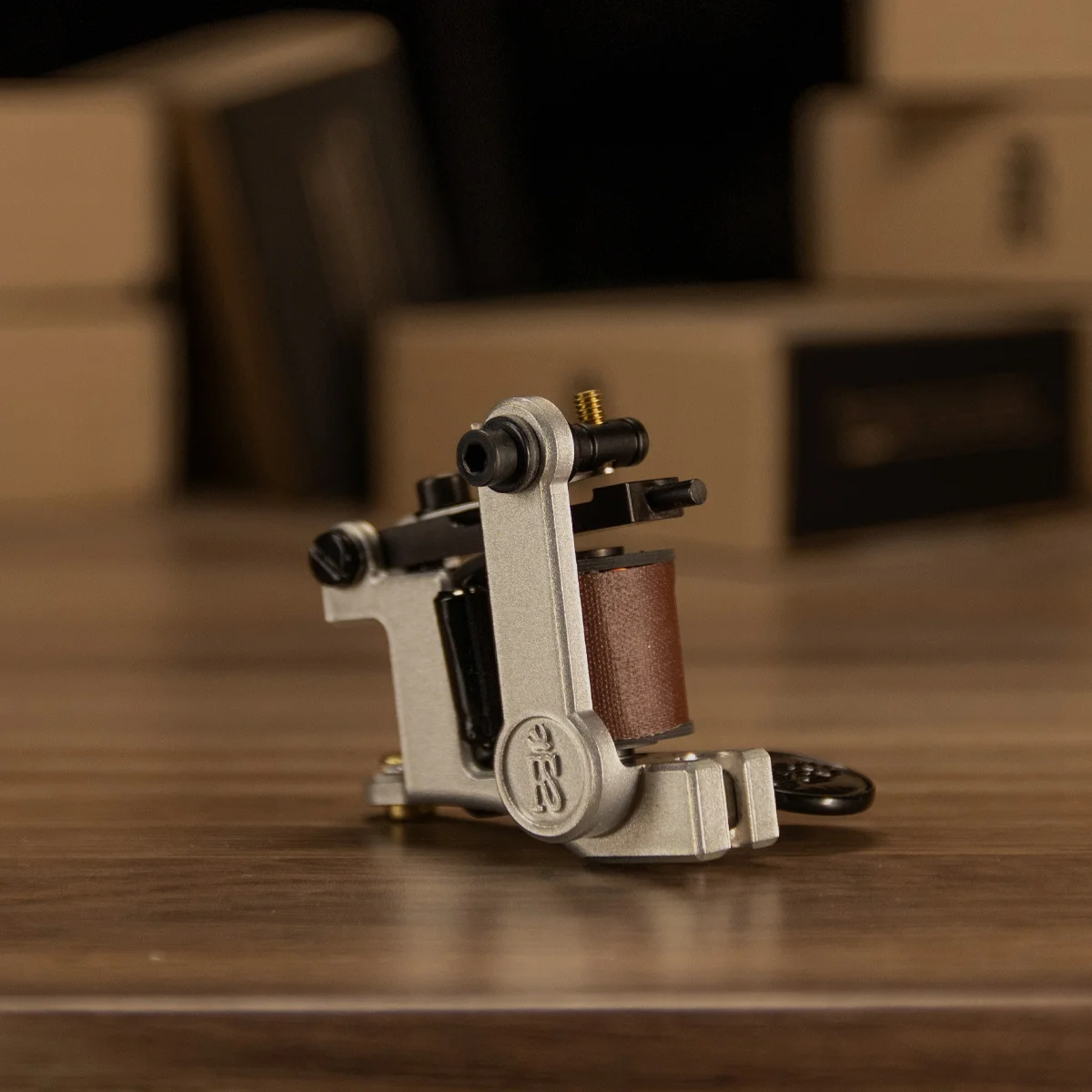
W 2026 roku większość tatuażystów używa bezprzewodowych maszynek piórkowych. To właściwy wybór w przypadku większości współczesnych prac. Jednak maszynki cewkowe nie odeszły do lamusa, a każdy, kto twierdzi inaczej, albo nigdy nie trzymał w ręku odpowiednio wyregulowanej maszynki cewkowej, albo sprzedaje maszynki bezprzewodowe i chce skłonić cię do wyboru właśnie tego rozwiązania.
Nazywam się Oleg Mozhey. Zajmuję się produkcją maszynek do tatuażu we Wrocławiu — każda maszynka jest montowana ręcznie przeze mnie lub przez osoby, które przeszkoliliśmy. Produkuję maszynki bezprzewodowe (modele REVO i REVO SHOT), maszynki rotacyjne z napędem bezpośrednim oraz pełną gamę maszynek cewkowych. Ten wpis dotyczy właśnie maszynek cewkowych. Dlaczego nadal mają one znaczenie, do czego się nadają i który model RightStuff najlepiej pasuje do Twojej pracy.
Powiem szczerze: chcę, żebyście kupowali u mnie. Chcę też, żebyście kupili odpowiednią maszynę. Niewłaściwa maszyna nie sprawi wam radości, nie skłoni was do ponownego zakupu, a sfrustrowany klient to coś gorszego niż utracona sprzedaż. Dlatego ten przewodnik ma na celu pomóc wam w wyborze — w tym wskazać konkurencję, jeśli jej produkt lepiej pasuje do waszej pracy.
Krótka odpowiedź — kiedy cewka nadal będzie dominować w 2026 roku
Maszynki tatuażowe typu coil są idealnym narzędziem do wykonywania tatuaży w stylu tradycyjnym lub amerykańskim tradycyjnym, do gęstego wypełniania kolorem, do techniki dotwork lub cieniowania metodą whip shading, gdy zależy nam na mechanicznym odczuciu, którego żadna maszynka rotacyjna nie jest w stanie odtworzyć, do makijażu permanentnego, a także do tworzenia zestawu z wieloma maszynkami, gdy potrzebujemy dedykowanej maszynki do rysowania konturów. W przypadku nowoczesnego realizmu, kolorowych cienkich linii oraz większości prac w stylu bezprzewodowym — praktycznym wyborem są maszynki rotacyjne typu pen (REVO, FK Irons Spektra Flux, Cheyenne SOL Nova). Wielu aktywnych artystów posiada oba rodzaje maszynek.
Jeśli zdecydowałeś, że cewka jest odpowiednia do Twojej pracy, oferta RightStuff obejmuje rysowanie cienkich linii i technikę „whip” (BONE Liner P.M), rysowanie średnio- i gruboziarniste (miniDOZZER TrueLiner), rysowanie grubych linii (LUCKY TrueLiner) oraz wszechstronne zastosowanie (The ONE single coil). Wszystkie cewki są ręcznie produkowane w Polsce. Cena standardowa 270 €, konfiguracja niestandardowa 290 €.
Dlaczego cewka wciąż ma znaczenie
Od dziesięciu lat dyskusja na temat cewek i mechanizmów obrotowych toczy się w sposób nieuczciwy. Dział marketingu promuje rozwiązania bezprzewodowe, ponieważ to właśnie tam leżą marże, skupia się uwaga mediów i tam zaczynają swoją karierę nowi artyści. Jednak mechaniczna rzeczywistość związana z cewkami jest specyficzna, a ignorowanie tego faktu niczego nie zmienia.
Maszyny cewkowe zapewniają charakter uderzeń, którego żadna maszyna rotacyjna nie jest w stanie w pełni odtworzyć. Igła jest napędzana przez pole magnetyczne, które zanika i odradza się wiele razy na sekundę, a opór mechaniczny pręta twornika wywołuje wibracje przenoszone przez ramę do dłoni. Czujesz, co dzieje się na skórze. Maszyna rotacyjna z napędem bezpośrednim wygładza to odczucie — co dla niektórych zastosowań jest zaletą, a dla innych ograniczeniem.
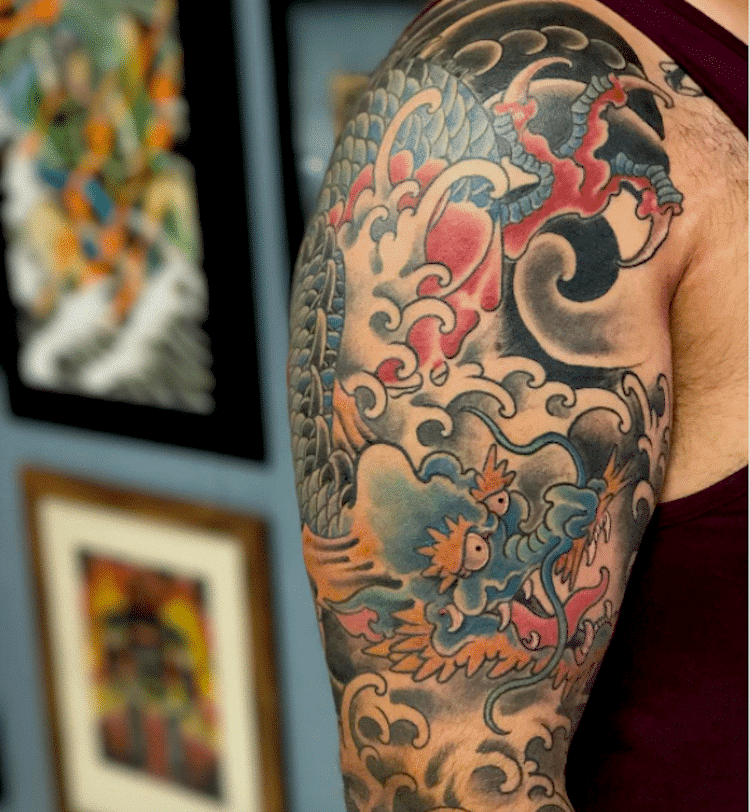
W przypadku stylów tradycyjnych i oldschoolowych, gdzie charakter mechaniki ma równie duże znaczenie jak efekt końcowy, większość artystów tworzących na najwyższym poziomie w tych stylach preferuje igłę spiralną. W przypadku gęstego nakładania farby w stylu amerykańskim tradycyjnym — jednolite, wyraziste kolory, brak przejść tonowych, ostre linie graniczne — igła spiralna nakłada farbę w sposób, z którym igła obrotowa ma trudności, by się równać. W przypadku techniki dotwork i cieniowania typu „whip shading” profil uderzenia cewki pozwala kontrolować intensywność poprzez nacisk dłoni i kąt nachylenia maszyny w sposób, który automatyczna regulacja w maszynach rotacyjnych z piórem spłaszcza.
Technologia cewkowa nie jest lepsza. Jest po prostu inna. Prawidłowe pytanie nie brzmi: “czy technologia cewkowa jest lepsza od obrotowej?”, lecz: “czy specyficzne właściwości technologii cewkowej przynoszą korzyści w mojej pracy?”.”
Gdzie cewka zawodzi — rzetelna lista
Każdy, kto sprzedaje ci maszynę do nawijania cewek, powinien ci to powiedzieć, zanim przyjmie od ciebie pieniądze:
Cewka jest cięższa niż mechanizm obrotowy. Większość profesjonalnych cewek waży od 150 g do 220 g. Niektóre tradycyjne cewki z mosiężną ramą są cięższe. W porównaniu z nowoczesnym piórem bezprzewodowym o wadze 170 g wraz z całą elektroniką cewka wydaje się cięższa w dłoni, ponieważ rozkład ciężaru jest inny — skupiony w ramie, a nie wyważony jak w przypadku pióra. Długie sesje z cewką wymagają pewnego przyzwyczajenia.
Cewka jest głośniejsza. Chodzi właśnie o ten charakterystyczny szum — to słyszalne działanie mechaniczne. Niektórzy klienci uważają to za onieśmielające. Dla porównania, nowoczesne bezprzewodowe wiertarki rotacyjne pracują niemal bezgłośnie.
Cewka wymaga regulacji. Odległość między stykami, stan kondensatora, napięcie sprężyny — to wszystko wpływa na działanie urządzenia. Urządzenie obrotowe wystarczy podłączyć i używać. Cewkę trzeba regulować. Niektórzy artyści to uwielbiają — daje to kontrolę nad charakterem pracy. Inni uważają to za uciążliwe. Przed zakupem szczerze oceń, do której grupy należysz.
Cewka wymaga zasilacza o odpowiedniej stabilności napięcia. Tanie zasilacze powodują niestabilną pracę maszyn do nawijania cewek. Należy przeznaczyć co najmniej 100–150 euro na zasilacz, który zapewni odpowiednią jakość pracy cewek. Eikon EMS 420, Critical CX-2R lub nasze własne produkty — wybierz urządzenie, które stabilnie utrzymuje napięcie.
Cewki nie można poddać sterylizacji w autoklawie jako kompletnego urządzenia. Sterylizuje się jednorazowe rurki, końcówki i uchwyty. Samo urządzenie jest wycierane między kolejnymi klientami. Jest to standard branżowy i nie dotyczy wyłącznie urządzenia Coil, ale warto o tym wiedzieć.
Jeśli te kompromisy są dla Ciebie nie do przyjęcia w Twojej pracy, kup bezprzewodowe pióro obrotowe i pomiń resztę tego wpisu.
Podejście oparte na ręcznym wykonaniu w RightStuff
Większość maszyn do cewek dostępnych na rynku w 2026 roku można podzielić na trzy kategorie. Chińskie cewki produkowane masowo, w cenie poniżej 100 euro — odpowiednie do nauki, o nierównej jakości mechanicznej. Cewki średniej klasy od uznanych marek, takich jak Stigma czy HM Rocket, w cenie 150–250 euro — o większej spójności, z mniej wyrazistym charakterem mechanicznym. Amerykańskie cewki klasy premium, ręcznie wykonane przez Workhorse Irons, Soba Custom Irons lub mniejszych, niszowych producentów, w cenie od 400 do 700+ euro — w pełni ręcznie dostrojone, długi czas realizacji zamówienia, doskonała jakość.
RightStuff zajmuje niszę, której nie pokrywają amerykańscy producenci butikowi. Urządzenia są ręcznie montowane w Europie przez tego samego inżyniera (czyli mnie), który projektuje ramy i nawijają cewki. Cena standardowa to 270 euro, a za konfiguracje niestandardowe – 290 euro. To znacznie mniej niż ceny amerykańskich producentów butikowych, przy zachowaniu tej samej jakości ręcznego wykonania – ponieważ pracuję bezpośrednio z Polski, bez łańcucha marż dystrybutorów w USA, a także dlatego, że zajmuję się produkcją cewek od 14 lat, a oprzyrządowanie projektowe jest już dopracowane.
Każda rama jest obrabiana metodą CNC z jednego kawałka brązu lub aluminium lotniczego 7075, w zależności od modelu. Cewki są nawijane na średnicy 26 mm z drutu o niestandardowych parametrach. Elementy stalowe są oksydowane na niebiesko lub pokryte powłoką cynkową, w zależności od ramy. Każda maszyna jest testowana i regulowana przed wysyłką. Czas realizacji zamówienia wynosi zazwyczaj 7–14 dni w przypadku konfiguracji standardowych, a w przypadku konfiguracji niestandardowych jest dłuższy.
Poniższa oferta przedstawia aktualny asortyment. Nie wszystkie modele są zawsze dostępne w magazynie — cewki są produkowane partiami.
BONE Liner P.M — specjalista od cienkich linii, stylu „whip” i techniki „dotwork”
Czym to jest: Wkładka cewki, jednoczęściowa rama z brązu, 26 mm × 8 zwojów, wyjątkowo długi skok, 135 Hz przy napięciu 6,6 V bez obciążenia, 180 g, elementy mocujące ze stali oksydowanej. Ostrożna ocena mocy: 3–9RL — w praktyce bez problemu osiąga 11RL. Cena standardowa: 270 euro.
Historia powstania: Urządzenie BONE Liner P.M. zostało zaprojektowane we współpracy ze specjalistką od makijażu permanentnego (PMU) w czasach, gdy na rynku krajów byłego Związku Radzieckiego nie zdążyły jeszcze zdominować maszynki rotacyjne. Praca w zakresie makijażu permanentnego wymaga precyzji, której nie zapewniają zwykłe maszynki do tatuażu — specjalistka pracuje na twarzy, brwiach i ustach, a margines błędu wynosi zero. Urządzenie BONE zostało skonstruowane zgodnie z tymi standardami.
Kiedy maszynki rotacyjne stopniowo wyparły maszynki cewkowe z większości zabiegów makijażu permanentnego, model BONE zyskał drugie życie. Te same cechy, które sprawiały, że sprawdzał się w makijażu permanentnym — kontrolowane uderzenie, delikatne wnikanie w skórę, przewidywalna długość skoku — okazały się idealne do cieniowania metodą „whip”, cieniowania punktowego oraz rysowania cienkich linii w tatuażu konwencjonalnym.
W czym się wyróżnia: Cieniowanie typu „whip” tam, gdzie potrzebujesz łagodnego początku i kontrolowanego uderzenia. Cieniowanie typu „dot” tam, gdzie liczy się spójność. Precyzyjne rysowanie linii w zakresie 3–7RL. Umiarkowane napięcie, wygodny chwyt, klasyczny charakter pióra mechanicznego.
Czego nie robi: Gęste skupiska ściegów. Jednolite wypełnienie. Wyraziste wykończenie grubymi, tradycyjnymi obramowaniami. Jeśli szukasz mocnego wykończenia, zwróć raczej uwagę na model LUCKY.
Kup to, jeśli: Zajmujesz się rysowaniem cienkich linii, cieniowaniem metodą „whip” i „dot” lub makijażem permanentnym i szukasz cewki, która ma swoją historię oraz zapewnia miękkość w dotyku.
LUCKY TrueLiner — gruby liner o dużej mocy
Czym to jest: Cewka typu „power liner”, jednoczęściowa rama z brązu lub aluminium 7075, 26 mm × 9 zwojów, długi skok, 135 Hz przy 6,6 V, 200 g (brąz) lub 150 g (aluminium), elementy mocujące ze stali oksydowanej. Przeznaczony do modelu 9–18RL. Cena standardowa 270 €, konfiguracje niestandardowe 290 €.
W czym się wyróżnia: Grube linie za jednym pociągnięciem. Model LUCKY opiera się na filozofii, że odpowiednio wyregulowany pędzel do grubych linii powinien pozwalać na czyste narysowanie linii o grubości 14RL lub 18RL już przy pierwszym pociągnięciu, z atramentem nasączonym na odpowiednią głębokość. Nie ma potrzeby wykonywania drugiego przejścia w celu “wypełnienia” linii, nie ma też zmagań z powierzchnią skóry. To kwintesencja tradycyjnej techniki rysowania grubymi liniami.
Wersja aluminiowa (150 g) to idealny wybór dla artystów, którzy pragną zachować charakter pióra Power Liner, ale nie są w stanie wygodnie trzymać pióra o wadze 200 g przez całą sesję. Wersja brązowa (200 g) zapewnia mocniejsze wyczucie mechaniczne, które niektórzy artyści preferują — jej waga stabilizuje pióro w dłoni.
Czego nie robi: Drobne szczegóły. Małe skupiska igieł (poniżej 7RL). Delikatne rozpoczęcie pracy. Jeśli wykonujesz tatuaże w stylu realistycznym lub z cienkimi liniami, to nie jest maszyna dla Ciebie.
Kup to, jeśli: Zajmujesz się haftem tradycyjnym amerykańskim, neotradycyjnym, blackworkiem lub dowolnym stylem, w którym podstawą są wyraziste, grube kontury. Brąz zapewnia stabilność, a aluminium – wytrzymałość.
miniDOZZER TrueLiner — szybka maszyna do układania warstwy podkładowej o średniej grubości
Czym to jest: Cewka mocy typu „power liner”, jednoczęściowa rama z aluminium 7075 lub brązu, 26 mm × 9 zwojów, długi skok, 140 Hz przy 6,6 V, 150 g (aluminium) lub 200 g (brąz). Przeznaczona do modelu 7–14RL. Cena standardowa: 270 €.
Model miniDOZZER TrueLiner plasuje się w ofercie pomiędzy modelami BONE i LUCKY. Charakteryzuje się szybszym odzewem niż model BONE (140 Hz w porównaniu z 135 Hz). Ma mniejszy zakres grubości igieł niż LUCKY (7–14RL w porównaniu z 9–18RL). Jest to igła do rysowania konturów przeznaczona dla artystów, którzy nie potrzebują skrajności na żadnym z końców — ani najdrobniejszych szczegółów, ani najgrubszych linii, ale wszystkiego, co mieści się w produktywnym środku.
W czym się wyróżnia: Średniej wielkości igły typu magnum, standardowe igły do rysowania konturów w rozmiarach 7–14RL, zapewniające szybkie i czyste rysowanie konturów dla artystów pracujących w szybkim tempie. Częstotliwość 140 Hz nadaje im bardziej dynamiczny charakter niż w przypadku wolniejszych igieł BONE — szybciej wtłaczają atrament, co sprawdza się w przypadku gęstej skóry i wyrazistych stylów.
Czego nie robi: Delikatne wprowadzanie, jak w przypadku modelu BONE. Pakowanie ogromnych butelek typu magnum, takich jak LUCKY, w jednym przejściu. Jeśli Twoja praca wymaga zastosowania jednej z tych skrajnych metod, wybierz odpowiednie narzędzie.
Kup to, jeśli: Szukasz pisaka, który poradzi sobie z większością zadań, nie skupiając się jednak na drobnych szczegółach ani na rysowaniu grubych, wyrazistych linii. To “pisak na co dzień” z tej serii.
The ONE — wszechstronny model z pojedynczą cewką
Czym to jest: Maszynka do tatuażu z pojedynczą cewką, rama z aluminium lotniczego 7075, wykończenie malowane proszkowo, cewka na zamówienie, elementy ze stali ocynkowanej w kolorze czarnym, skok 3,8 mm, 135 Hz przy napięciu 6,5 V, waga 130 g. Przystosowana do cewek 3–14RL. Dostępna w kilku kolorach ramy.
Urządzenia z pojedynczą cewką opierają się na filozofii odmiennej od tej stosowanej w modelach z podwójną cewką. Jedna cewka zamiast dwóch oznacza inny charakter doznania — łagodniejszy, płynniejszy, mniej agresywny. Igła jest napędzana przez jedno pole magnetyczne zamiast dwóch, więc działanie przypomina raczej hybrydę między cewką a mechanizmem obrotowym. Niektórzy artyści opisują to jako “łagodniejszą cewkę”.”
Model ONE to najbardziej wszechstronna maszyna w naszej ofercie maszyn cewkowych i obecnie najlepiej sprzedający się model. Szeroki zakres igieł 3–14RL w połączeniu ze skokiem 3,8 mm sprawia, że przy użyciu odpowiedniej igły nadaje się ona do rysowania konturów, drobnych cieniowań oraz wypełniania. Jest to również najlżejsza maszyna w naszej ofercie cewkowej, ważąca zaledwie 130 g — dzięki temu długie sesje są mniej męczące dla dłoni.
W czym się wyróżnia: Możliwość wykonywania zarówno konturowania, jak i cieniowania za pomocą jednego urządzenia. Długie sesje, w których liczy się wytrzymałość. Artyści, którzy pragną uzyskać charakterystyczny efekt cewki, nie decydując się jednak na specjalistyczny marker do konturowania.
Czego nie robi: Grube kontury (w tym celu użyj koloru LUCKY). Niezwykle precyzyjne rysowanie w stylu PMU (użyj koloru BONE). To pędzelek uniwersalny, a nie specjalistyczny.
Kup to, jeśli: Szukasz maszyny z jednym cewnikiem, która dobrze radzi sobie z większością zadań, a waga i wygoda są dla Ciebie ważniejsze niż maksymalna specjalizacja.
Seria obrotowa RightStuff — w skrócie
Jeśli czytasz ten tekst i zdajesz sobie sprawę, że tak naprawdę chcesz maszynę rotacyjną, RightStuff produkuje również gamę maszyn do tatuażu z napędem bezpośrednim. Wkrótce rozpocznie się planowana wyprzedaż maszyn rotacyjnych — śledź naszą stronę lub zapisz się na listę mailingową, aby otrzymać powiadomienie.
Obecna oferta urządzeń obrotowych obejmuje: CROSS (lekka, precyzyjna wiertarka obrotowa, 70 g, dostępna z skokiem 3,8 mm lub 4,5 mm), Zmienna KEG (skok regulowany w zakresie od 1 mm do 5 mm, wyjątkowa wszechstronność), KEG Slide (napęd bezpośredni 4,2 mm) oraz RE:verse (4 mm, podstawowy model z napędem bezpośrednim). Wszystkie egzemplarze są ręcznie montowane w Polsce.
A flagowym modelem marki jest — REVO bezprzewodowa maszyna do pisania z K-PULSE™ dysk. To zupełnie inne urządzenie do innych zadań — bezprzewodowe, nowoczesne, zaprojektowane z myślą o artyście, który całkowicie zrezygnował z kabli.
Jak cewki RightStuff wypadają w porównaniu z żelazkami Workhorse i Soba Custom
Warto bezpośrednio porównać dwóch głównych amerykańskich producentów cewek typu boutique.
Żelazka Workhorse (Teksas, USA) to złoty standard wśród amerykańskich cewek wykonywanych ręcznie. Firma Workhorse, prowadzona między innymi przez Dana Dringenberga i Aarona Caina, oferuje maszynki dostosowywane przez tatuażystów specjalnie dla tatuażystów. Ceny wynoszą zazwyczaj od $400 do $700 USD, w zależności od konfiguracji. Czas realizacji zamówienia może być długi. Workhorse to wybór dla tych, którzy cenią sobie ugruntowaną amerykańską tradycję cewek i dysponują odpowiednim budżetem.
Soba Custom Irons (Teksas, USA) – to bardziej kameralna firma, dłuższe czasy oczekiwania, maszyny dostosowane do konkretnych wymagań klienta. Ceny podobne do Workhorse lub wyższe. Soba jest przeznaczona dla artystów, którzy chcą mieć cewkę wykonaną dokładnie według własnych preferencji i są gotowi poczekać.
RightStuff (Wrocław, Polska) oferuje produkty tej samej kategorii — ręcznie montowane, ręcznie dostrajane, wytwarzane przez jednego rzemieślnika — w cenie 270–290 euro. Ta cena nie wynika z gorszej jakości urządzenia. Wynika to z faktu, że prowadzę działalność bezpośrednio z Europy, bez marży dystrybucyjnej obowiązującej w USA, a także z tego, że oprzyrządowanie projektowe, po 14 latach produkcji, już się zwróciło. Czas realizacji zamówień jest krótszy niż w przypadku amerykańskich marek butikowych — zazwyczaj wynosi 2–3 dni w przypadku konfiguracji dostępnych z magazynu.
Jeśli zależy Ci na amerykańskiej marce i dysponujesz budżetem powyżej 500 euro, Workhorse i Soba to świetne wybory. Jeśli natomiast szukasz tej samej jakości ręcznego wykonania w europejskich cenach i z krótszym czasem dostawy, alternatywą jest RightStuff. Rzetelne porównanie, bez marketingowych sztuczek.
Jak wybrać odpowiedni model cewki RightStuff
Matryca szybkiego podejmowania decyzji:
Jeśli wykonujesz głównie tatuaże z wykorzystaniem cienkich linii, cieniowania metodą „whip shading”, techniki „dotwork” lub makijażu permanentnego (PMU): BONE Liner P.M.
Jeśli zajmujesz się głównie tradycyjnym haftem z grubymi liniami lub haftem typu blackwork: LUCKY TrueLiner. Brąz, jeśli zależy Ci na wadze i stabilności, aluminium, jeśli zależy Ci na wytrzymałości.
Jeśli szukasz wędki typu „one-liner”, która poradzi sobie z przynętami w zakresie 7–14RL bez specjalizacji: miniDOZZER TrueLiner.
Jeśli szukasz maszynki z jedną cewką, która nadaje się do wszystkiego i zapewnia komfort podczas długich sesji: Ten JEDYNY.
Jeśli tworzysz konfigurację obejmującą wiele maszyn: Model ONE do cieniowania i rysowania mieszanego, a do rysowania konturów – model BONE (cienki) lub LUCKY (gruby), w zależności od stylu.
Konfiguracje na zamówienie kosztują 290 € — można wybrać wykończenie ramy, wykończenie okuć, liczbę zwojów sprężyny oraz kilka innych szczegółów. Przed złożeniem zamówienia prosimy o kontakt pod adresem [email protected] w celu omówienia szczegółów.
Najczęściej zadawane pytania
Czy w 2026 roku nadal warto kupować maszynki do tatuażu z cewką?
Tak, w konkretnych przypadkach. Style tradycyjny i amerykański tradycyjny, gęste nakładanie koloru, technika „dotwork”, cieniowanie metodą „whip shading”, makijaż permanentny oraz artyści, którzy cenią sobie mechaniczne wyczucie, którego żaden pióro rotacyjne nie jest w stanie w pełni odtworzyć. W przypadku nowoczesnego realizmu, kolorowania cienkich linii lub procesów wymagających pracy bezprzewodowej praktycznym wyborem jest pióro rotacyjne. Wielu aktywnych artystów posiada oba rodzaje piór.
Jaka jest różnica między maszynką do tatuażu z pojedynczą cewką a maszynką z podwójną cewką?
Maszyny z podwójną cewką posiadają dwie cewki elektromagnetyczne, które napędzają pręt twornika — zapewniają większą moc i bardziej zdecydowane uderzenie, co jest typowe dla maszyn do rysowania konturów i wypełniania. Maszyny z pojedynczą cewką mają jedną cewkę — zapewniają łagodniejsze uderzenie, płynniejszą pracę i większą wyrozumiałość przy mieszanym rysowaniu konturów i cieniowaniu. Maszyny z pojedynczą cewką są często opisywane jako hybryda połączenia wrażeń z maszyn cewkowych i rotacyjnych. RightStuff The ONE to maszynka z pojedynczą cewką; modele BONE, LUCKY i miniDOZZER to maszynki z podwójną cewką.
Jak długo wytrzymuje ręcznie wykonana maszynka do tatuażu z cewką?
Prawidłowo konserwowana maszynka do tatuażu z cewką, wyprodukowana przez renomowanego producenta, wytrzymuje 10–20 i więcej lat profesjonalnego użytkowania. Jeśli wykonujesz tatuaże codziennie, cewki mogą wymagać wymiany raz na dekadę. Sprężyny są elementami zużywającymi się i należy je wymieniać w razie potrzeby. Ramy i elementy metalowe zasadniczo są trwałe. Tanie, masowo produkowane cewki mogą ulec awarii już po 2–3 latach.
Jakiego zasilacza potrzebuję do maszyny do nawijania cewek RightStuff?
Każdy profesjonalny zasilacz do tatuażu zapewniający stabilne napięcie w zakresie od 4 V do 10 V — Eikon EMS 420, Critical CX-2R, FK Irons Cyclone, zasilacze RightStuff. Należy unikać tanich zasilaczy poniżej 60 euro — niestabilność napięcia powoduje nierównomierną pracę cewek i skraca żywotność maszynki.
Czy maszynkę do tatuażu z cewką można wykorzystywać zarówno do rysowania konturów, jak i do wypełniania?
Większość cewek jest przystosowana do pełnienia jednej funkcji — rysowania konturów (liner) lub cieniowania/wypełniania (shader/packer) — ponieważ napięcie sprężyny, odległość między elektrodami oraz liczba zwojów różnią się w zależności od przeznaczenia. Niektóre maszynki z pojedynczą cewką, takie jak model The ONE, radzą sobie z obiema funkcjami na zadowalającym poziomie. Do specjalistycznej pracy w jednym z tych kierunków warto zaopatrzyć się w dedykowane narzędzie. Wielu artystów posiada zarówno cewkę do rysowania konturów, jak i cewkę do cieniowania.
Czy cewki RightStuff można sterylizować w autoklawie?
Cała maszynka nie jest poddawana sterylizacji w autoklawie — jest to standardowa praktyka w przypadku wszystkich maszynek do tatuażu typu coil i rotary, niezależnie od marki. Jednorazowe rurki, końcówki i uchwyty są sterylizowane w autoklawie (lub dostarczane w stanie wysterylizowanym). Korpus maszynki jest wycierany między kolejnymi klientami za pomocą środka do dezynfekcji powierzchni. Jest to procedura zgodna ze standardami branżowymi.
Jaka jest różnica w cenie między wersjami z ramą z brązu a wersjami z ramą aluminiową?
Cena jest taka sama — standardowo 270 euro za oba materiały. Ramy z brązu są cięższe (w przedziale 180–200 g) i zapewniają większą stabilność mechaniczną oraz tradycyjne wrażenia z użytkowania. Ramy aluminiowe są lżejsze (w przedziale 130–150 g) i zmniejszają zmęczenie dłoni podczas długich sesji. Wybór zależy od osobistych preferencji, a nie od ceny.
Dlaczego cewki RightStuff są tańsze niż żelazka Workhorse lub Soba?
Ponieważ nasza siedziba znajduje się w Polsce i wysyłamy produkty bezpośrednio, bez marży dystrybutorów z USA, a także dlatego, że dzięki 14 latom udoskonalania projektów koszty oprzyrządowania zostały już pokryte. Amerykańskie cewki z niszowych marek mają podobne marże, ale przy wyższych kosztach bazowych (koszty pracy w USA, import surowców, prowizje dystrybutorów). Jakość wykonania jest porównywalna — różnica w cenie wynika z uwarunkowań geograficznych i strukturalnych, a nie z materiałów czy jakości wykonania.
Jak długo trwa wysyłka cewki RightStuff?
Konfiguracje standardowe są zazwyczaj wysyłane w ciągu 2–3 dni. Realizacja zamówień na konfiguracje niestandardowe (poziom cenowy 290 €) trwa dłużej — zazwyczaj 3–7 dni, w zależności od wybranych opcji. Przed złożeniem zamówienia na konfigurację niestandardową prosimy o kontakt pod adresem [email protected] w celu potwierdzenia specyfikacji i aktualnego czasu realizacji.
Czy mogę zamówić cewkę RightStuff z indywidualnym grawerunkiem lub wykończeniem ramki?
Tak. Konfiguracje niestandardowe obejmują opcje wykończenia ramy, wykończenia okuć oraz grawerunku. Pakiet za 290 € obejmuje większość niestandardowych życzeń. Prace specjalistyczne (nietypowe materiały, zaawansowane rozwiązania inżynieryjne) są wyceniane osobno na zapytanie. Prosimy o kontakt przed złożeniem zamówienia.
Firma RightStuff Tattoo Machines ma siedzibę we Wrocławiu w Polsce. Ręcznie produkujemy modele BONE, LUCKY, miniDOZZER, The ONE oraz pełną gamę maszyn cewkowych RightStuff, a także linię maszyn rotacyjnych CROSS, KEG, RE:verse oraz bezprzewodowe modele K-PULSE™ REVO i REVO SHOT. Każda maszyna jest montowana w Polsce.
Zapoznaj się z pełną ofertą na stronie rightstuff.eu. Masz pytania dotyczące tego, która maszyna najlepiej sprawdzi się w Twojej pracy? Wyślij e-mail na adres [email protected] — odpowie na niego ten sam inżynier, który skonstruował Twoją maszynę.

 English
  Deutsch
  Polski
  Français
  Italiano
  Español