
Introduction: Why Mixing Ink is a Professional Necessity
A professional tattoo artist’s creativity is often limited only by their palette. While no collection can contain every shade, the skill of blending tattoo inks allows for the creation of limitless, custom colors, nuanced undertones, and precise tints.
However, mixing tattoo ink requires adherence to strict safety and color theory principles to ensure pigment integrity, client safety, and consistent healing. This guide covers the essential techniques and best practices for creating custom tattoo colors.
1. Safety First: The Core Rule of Ink Blending
The most critical factor in mixing ink is maintaining absolute sterility. Breaking this rule introduces the high risk of cross-contamination and potential infection, which damages both the ink and the client’s skin.
| Safety Protocol | Professional Best Practice |
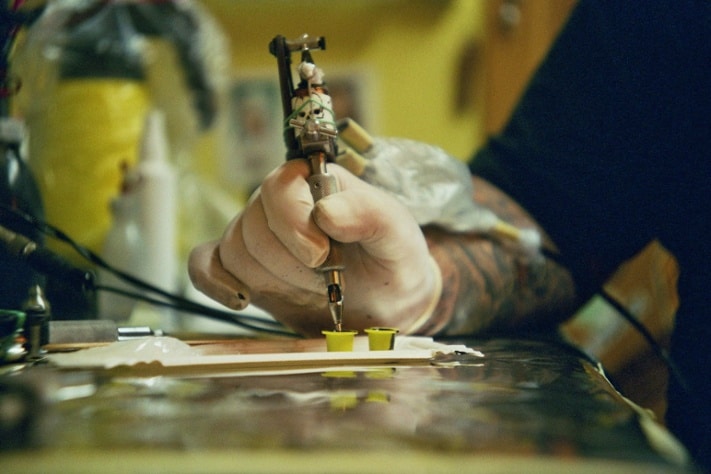
| Sterile Tools Only | NEVER use a used needle tip to stir ink. Use a dedicated, single-use, sterilized mixing stick or a battery-operated ink mixer for consistency. |
| Compatible Inks | For best results and to prevent clumping/separation, only mix inks from the same professional manufacturer. Different brands may be chemically incompatible. |
| Shake Bottles | Always shake the original ink bottles thoroughly before pouring. Pigments can separate from the carrier solution, leading to inconsistent color concentration. |
2. Adjusting Value: Darkening and Lightening Ink
Adjusting the value (lightness or darkness) of a color allows you to create shadows, depth, and pastel shades. This must be done slowly and deliberately.
How to Make Tattoo Ink Darker (Lowering Value)
A color’s value can be lowered by adding a darker pigment.
- Use Black Ink: To deepen a color (e.g., creating a “dark blood” red), add one drop of black ink at a time.
- Use a Complementary Darker Color: For a more nuanced approach, add a darker complementary color (e.g., a drop of dark blue to an orange) to slightly neutralize and deepen the tone.
- Mix Slow: Blend the darker pigment thoroughly before testing the shade. Always err on the side of caution—you can always add more.
How to Make Tattoo Ink Lighter (Tints and Washes)
A color’s value can be raised (made lighter) using white pigment or a professional diluent.
| Goal | Mixing Agent | Method |
| Create Opaque Tints | White Ink (specifically, Mixing White) | Add white ink to the base color drop by drop until the desired pastel or lighter opaque shade is achieved. |
| Create Transparent Washes | Professional Shading Solution or Sterile Distilled Water | This dilutes the pigment. Use professional solutions for better flow and stability, especially for Grey Wash techniques. Avoid non-sterile, tap, or regular distilled water. |
Pro Tip: To maintain control, always begin with the lighter color in the ink cap and gradually introduce the darker pigment.
3. Creating New Hues: Color Theory for Custom Blends
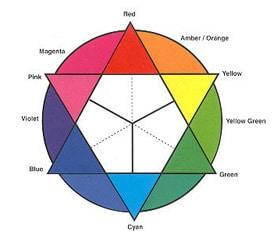
To create a new hue, a solid understanding of the color wheel is essential. You must be able to predict how Primary(Red, Yellow, Blue) colors combine to form Secondary (Orange, Green, Purple) and Tertiary colors.
| Desired New Hue | Base Colors to Mix | Example Ratio Tip |
| Orange | Red + Yellow | Add more Red for a reddish-orange tint. |
| Purple/Violet | Red + Blue | Blue is dominant; add it slowly to the Red base. |
| Green | Blue + Yellow | Yellow is less dominant; add Blue slowly to the Yellow base. |
| Brown/Muted Tones | Red + Green (Complementary Colors) | Mixing colors opposite on the wheel (complements) can create earthy, rich brown, or neutralize overly vibrant colors. |
4. Advanced Techniques: Mixing for Consistency and Healing
Mixing the correct shade in the cap is only half the battle. Consistency and layering are crucial for how the color heals in the skin.
- Custom Gradient Sets: When creating a transition (e.g., a blend from one color to another), pre-mix 3–5 small ink cups in a smooth, tiered gradient transition. This allows you to apply a smooth, packed transition on the skin using different levels of saturation.
- Layering Technique: For depth and saturation, artists often apply darker colors first, as wiping black or dark tones over light colors can sometimes stain the lighter ink, making it muddy.
- Record Your Formulas: To ensure consistent touch-ups or replication of the shade for future clients, keep a log of your mixing ratios (e.g., “6 drops Red + 2 drops White + 1 drop Yellow”). This demonstrates high professional standards.
 English
  Deutsch
  Polski
  Français
  Italiano
  Español