
Answer: The real difference between high-end and low-end tattoo machines comes down to four things: manufacturing tolerances, motor quality, drive system engineering, and long-term reliability. A high-end machine is built to perform consistently session after session, with parts that fit precisely, motors that don’t degrade quickly, and mechanical behavior that stays predictable. A low-end machine may look similar on paper but will introduce variability — in stroke, in vibration, in skin interaction — that compounds into worse results and faster wear.
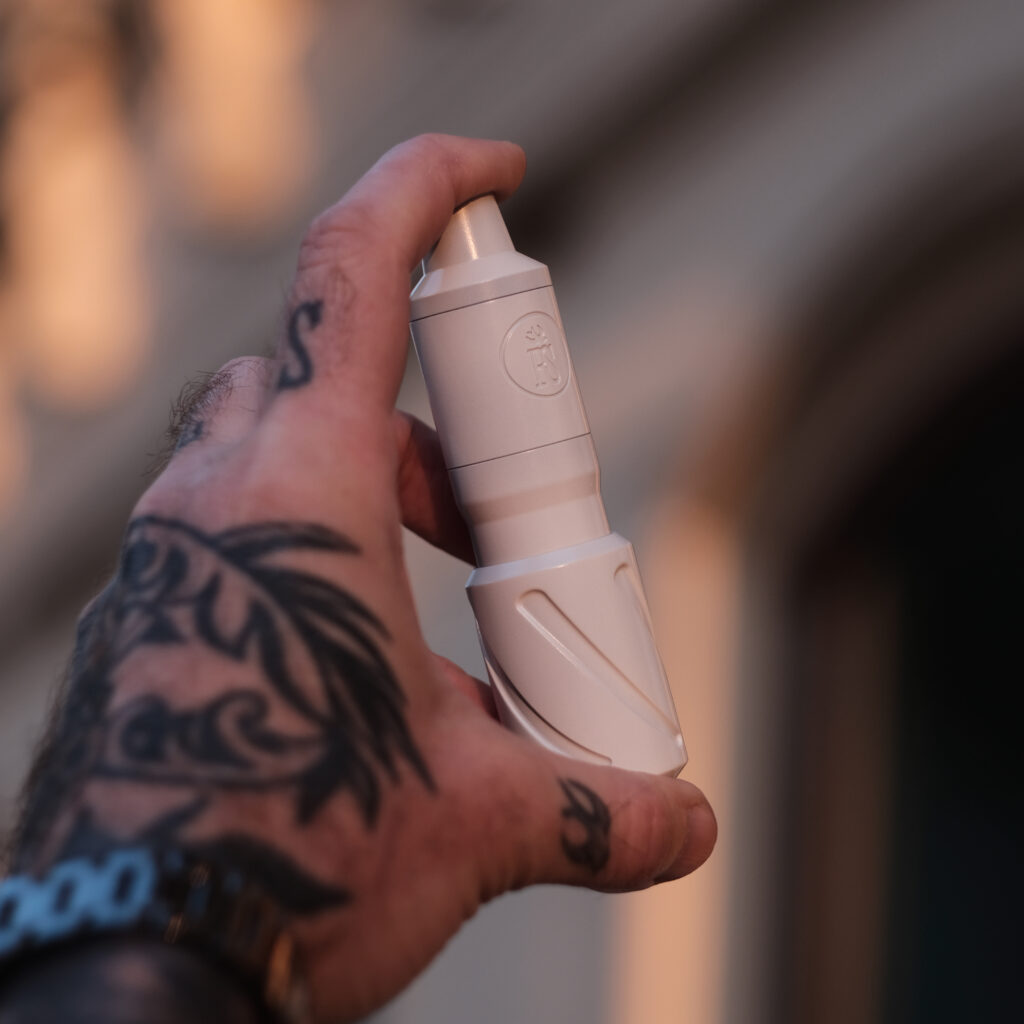
Does a More Expensive Tattoo Machine Make You a Better Artist?
No — and this is worth saying clearly upfront.
A €700 machine will not give a beginner the results of a 10-year professional. Skill, practice, and understanding of depth, pressure, and technique are what separate artists. No machine changes that.
What a high-end machine does is remove friction between your intention and the result. When the machine behaves consistently — the same stroke, the same needle response, the same vibration profile every pass — your decisions about composition, shading, and line weight translate directly to the skin. You are not compensating for mechanical variability on top of developing your technique.
A low-end machine introduces variables the artist has to manage. That is the real cost — not the price tag, but the cognitive and physical overhead of working around unpredictable equipment.
What Are Manufacturing Tolerances and Why Do They Matter?
Tolerances refer to how precisely machine parts are manufactured and how accurately they fit together. In a tattoo machine, this affects everything: how smoothly the drive system runs, how consistently the needle stroke repeats, how much vibration transfers to the artist’s hand.
High-end machines are built to tight tolerances. Parts fit with minimal play, which means the mechanical behavior of the machine is stable and repeatable. Every stroke cycle behaves like the last one.
Low-end machines are often built to looser tolerances — parts that fit “close enough” rather than precisely. The result is more vibration, more mechanical noise, inconsistent needle behavior, and faster wear as parts rattle against each other over time.
For the artist, tight tolerances mean less hand fatigue, cleaner lines on the first pass, and a machine that performs the same on day one as it does a year later.
What Kind of Motor Should a Professional Tattoo Machine Have?
The motor is the heart of any rotary or pen tattoo machine. It determines how consistently the needle stroke is delivered, how the machine responds under load (skin resistance), and how long the machine lasts under regular professional use.
High-end machines use precision motors — often brushless motors or carefully selected coreless motors — chosen specifically for low vibration, consistent RPM under load, and longevity. The motor should maintain its speed and behavior whether the artist is working on soft skin or tougher areas, and whether it is the first minute of a session or the eighth hour.
Low-end machines typically use generic motors sourced for cost rather than performance. These motors may perform acceptably when new but degrade noticeably with use — losing consistency, developing vibration, or becoming audibly louder as internal components wear.
When evaluating any machine, the motor specification matters. Look for machines where the manufacturer is transparent about motor type and has engineered the drive system around that motor’s specific characteristics — not simply dropped a generic motor into a housing.
What Is the Difference Between a Drive System and Just a Motor?
This is where high-end engineering genuinely separates itself from budget alternatives — and it is a distinction most buyers miss.
A motor provides rotation. A drive system determines how that rotation becomes needle movement, and specifically how the needle behaves at the moment it enters the skin.
A well-engineered drive system controls the acceleration profile of the needle stroke. Rather than simply pushing with maximum force on every cycle, it manages how energy is delivered during penetration — allowing the needle to enter cleanly with less trauma to the surrounding tissue.
The RightStuff REVO, for example, is built around the K-PULSE™ drive system — a patent-pending mechanical drive concept that optimizes needle acceleration at the point of penetration rather than relying on brute voltage. The result is smoother entry, less skin resistance, more consistent pigment placement, and faster healing for the client. This is not firmware or software — it is mechanical engineering built into the physical drive, which means it works consistently regardless of battery level, voltage setting, or skin type.
A budget machine has a motor. A professional machine has a drive system designed around how skin actually responds to needle penetration.
How Important Is Warranty and After-Sales Support?
For a professional tool used daily, warranty and manufacturer support matter significantly — not just as a safety net, but as a signal of the manufacturer’s confidence in their own product.
A manufacturer offering a comprehensive warranty is making a statement: this machine is built to last, and if it doesn’t, we will stand behind it. Short or non-existent warranties on budget machines often reflect the manufacturer’s own assessment of the product’s expected lifespan.
Practical things to look for: how long is the warranty period, does it cover manufacturing defects or just parts, is repair service available, and how responsive is the manufacturer when something goes wrong? For European artists, purchasing from a European manufacturer or supplier also simplifies warranty claims, repair logistics, and customer communication significantly.
RightStuff machines are manufactured and supported directly, with customer service accessible through rightstuff.eu/contacts — no intermediary, no language barrier, no shipping machines across continents for repair.
Is a Low-End Machine Ever the Right Choice?
Yes — in specific situations.
A lower-cost machine makes sense as a dedicated backup — kept charged and ready for situations where a primary machine fails mid-session. Having a reliable backup prevents cancellations and keeps the session moving. It does not need to perform at the same level as a primary machine; it needs to be functional and consistent enough to finish the work.
A lower-cost machine can also serve well as a practice or training tool — allowing a developing artist to work without concern about wear on a primary investment while technique is still being developed.
What a low-end machine should not be is your primary professional tool if you are working on clients regularly. The mechanical variability compounds into inconsistent results, and the physical overhead of compensating for it accumulates into hand fatigue over long sessions.
What Should You Actually Look for When Buying a Professional Tattoo Machine?
Rather than brand names, focus on these verifiable factors:
Drive system transparency. Can the manufacturer explain how the drive system works and why it was engineered that way? Vague marketing language (“ultra-precision”, “pro-grade”) without technical substance is a red flag.
Stroke length options. A professional machine should offer multiple stroke configurations so it can be adapted to different work types — fine line, shading, color packing — rather than locking you into one mechanical profile.
Battery life for wireless machines. For wireless pen machines, battery life directly affects professional usability. A machine that needs recharging mid-session is a machine that interrupts your work. Look for genuine all-day capacity.
Weight and ergonomics. Machine weight affects hand fatigue over long sessions. The right weight is personal — some artists prefer lighter machines for agility, others prefer heavier machines for stability — but the option to choose matters.
Real specifications, not marketing claims. Voltage range, RPM, stroke length, grip diameter, battery capacity — these should be listed clearly. If a manufacturer won’t publish their specs, ask why.
The RightStuff wireless machine range covers stroke lengths from 3.2mm to 4.7mm, offers weight options, runs up to 12 hours on a single charge, and publishes full technical specifications for every model.
Comparison Summary: High-End vs Low-End Tattoo Machines
| Factor | High-End Machine | Low-End Machine |
|---|---|---|
| Manufacturing tolerances | Tight — consistent, precise fit | Loose — variable behavior |
| Motor quality | Precision motor, stable under load | Generic motor, degrades with use |
| Drive system | Engineered for skin interaction | Basic rotation, no acceleration control |
| Stroke consistency | Repeatable session to session | Variable, especially as machine ages |
| Vibration | Low — less hand fatigue | Higher — more physical overhead |
| Warranty | Comprehensive, manufacturer-backed | Limited or none |
| Best use | Primary professional tool | Backup or training |
Frequently Asked Questions
Is a €700 tattoo machine worth it for a professional? For a working professional tattooing clients regularly, yes. The consistency, reduced hand fatigue, better skin outcomes, and longer machine lifespan make the investment return over time. The cost per session across a machine’s lifespan is often lower than repeatedly replacing cheaper machines.
What is the best tattoo machine for beginners? A mid-range machine with a stable, predictable drive system is better for beginners than either a budget machine (too variable) or a top-end machine (wasted investment while technique is developing). Something that gives honest, consistent feedback from every pass helps a developing artist understand what their technique is producing.
Can a cheap tattoo machine damage skin more? Yes, indirectly. Machines with loose tolerances and poor drive systems tend to produce more trauma per pass because the needle entry is less controlled. More passes to achieve saturation means more skin trauma, slower healing, and higher risk of blowouts — particularly on sensitive skin or challenging placements.
What stroke length is best for lining vs shading? Shorter strokes (3.2–3.5mm) give tighter control for fine line work. Longer strokes (4.2–4.7mm) drive ink more decisively for shading and bold traditional work. A machine with multiple stroke options gives you the flexibility to dial this in rather than compromising.
Are wireless tattoo machines as powerful as wired ones? In professional-grade wireless machines, yes. The distinction between wired and wireless is about power source, not performance. A well-engineered wireless machine with a quality motor and drive system performs identically to a wired equivalent — with the added benefit of freedom of movement and a cleaner workspace.
<script type="application/ld+json">
{
  "@context": "https://schema.org",
  "@type": "Article",
  "headline": "What Is the Real Difference Between High-End and Low-End Tattoo Machines?",
  "description": "A practical guide to what separates professional-grade tattoo machines from budget alternatives — covering tolerances, motors, drive systems, warranty, and what to look for when buying.",
  "image": "https://eadn-wc03-16019892.nxedge.io/cdn/wp-content/uploads/2023/06/7AE80C19-FDF3-431D-B828-9B0ECBA73F7F-1024x1024.jpg",
  "author": {
    "@type": "Organization",
    "name": "RightStuff Tattoo Machines",
    "url": "https://rightstuff.eu"
  },
  "publisher": {
    "@type": "Organization",
    "name": "RightStuff Tattoo Machines",
    "logo": {
      "@type": "ImageObject",
      "url": "https://eadn-wc03-16019892.nxedge.io/cdn/wp-content/uploads/2021/05/rs_logo-160x40.png"
    }
  },
  "datePublished": "2026-03-08",
  "dateModified": "2026-03-08",
  "mainEntityOfPage": {
    "@type": "WebPage",
    "@id": "https://rightstuff.eu/blog/high-end-tattoo-machines-vs-low-end-a-comprehensive-comparison/"
  },
  "mentions": {
    "@type": "Product",
    "name": "RightStuff REVO Wireless Tattoo Machine",
    "image": "https://eadn-wc03-16019892.nxedge.io/cdn/wp-content/uploads/2023/06/7AE80C19-FDF3-431D-B828-9B0ECBA73F7F-1024x1024.jpg",
    "url": "https://rightstuff.eu/product/wireless-tattoo-machine-revo/",
    "brand": {
      "@type": "Brand",
      "name": "RightStuff"
    },
    "offers": {
      "@type": "Offer",
      "priceCurrency": "EUR",
      "price": "700",
      "availability": "https://schema.org/InStock",
      "url": "https://rightstuff.eu/product/wireless-tattoo-machine-revo/"
    }
  }
}
</script>
 English
  Deutsch
  Polski
  Français
  Italiano
  Español