
Różnica między wysokiej klasy a niskiej klasy maszynką do tatuażu nie polega na marce ani jakości wykończenia. Chodzi o konstrukcję układu napędowego, tolerancje montażowe oraz zachowanie maszynki pod obciążeniem. Maszynka za 150 euro i maszynka za 700 euro mogą wyglądać podobnie w specyfikacji technicznej. Jednak po dwóch godzinach pracy na nasyconej skórze ich wydajność znacznie się różni.
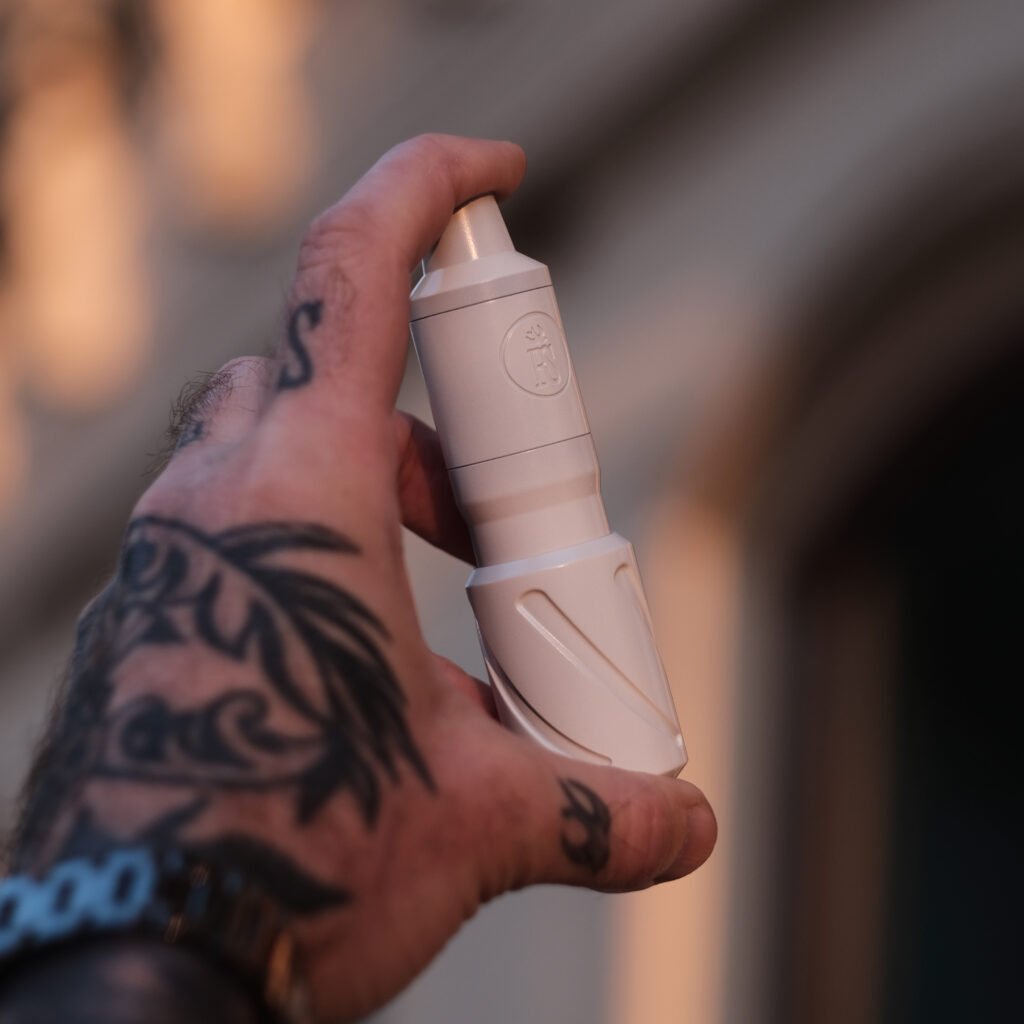
Co tak naprawdę oznacza termin ‘high-end’
W świecie tatuażu termin „high-end” oznacza jedno: stałą, przewidywalną wydajność przez całą sesję. Nie tylko na początku sesji. Ale dopiero po sześciu godzinach, przy trzecim kliencie, na skórze, która została już mocno obciążona.
Maszyny z niższej półki są produkowane z zachowaniem odpowiednich tolerancji. Działają. Jednak pod obciążeniem — przy dużych skupiskach igieł, nasyconej skórze, długich sesjach — pojawiają się nieprawidłowości. Nierównomierne ułożenie igieł. Zacinanie się silnika. Wibracje, które po wielu godzinach odczuwalne są w dłoni. Maszyny z wyższej półki są stworzone właśnie z myślą o takich sytuacjach.
Prawdziwe różnice
Układ napędowy
Właśnie na to idą pieniądze. Maszyny z niższej półki wykorzystują prosty napęd bezpośredni z tanimi łożyskami i luźnymi tolerancjami. Prędkość silnika odpowiada prędkości igły — każdy opór spowalnia maszynę. Maszyny z wyższej półki, takie jak REVO, wykorzystują zaawansowane systemy napędowe. K-PULSE™ zapewnia stałą siłę uderzenia pod obciążeniem. Można to odczuć na podstawie wrażeń z użytkowania maszyny podczas uderzania w grubą skórę lub zagęszczania dużej powierzchni.
Tolerancje konstrukcyjne
W produktach z niższej półki cenowej tolerancje produkcyjne są szerokie. Powoduje to chwianie się, drgania i hałas. REVO jest wykonany z aluminium obrabianego metodą CNC, charakteryzującego się wąskimi tolerancjami w całym produkcie. Mniejszy luz oznacza mniejsze drgania. Mniejsze drgania oznaczają mniejsze zmęczenie dłoni i bardziej precyzyjne ustawianie igły.
Jakość silnika
W urządzeniach z niższej półki cenowej stosuje się silniki generyczne o krótkiej żywotności. W urządzeniach profesjonalnych stosuje się silniki przystosowane do długotrwałej, profesjonalnej eksploatacji. System Motor Guard w modelu REVO wykrywa sytuacje przeciążenia i odcina zasilanie w ciągu jednej sekundy — chroniąc silnik przed uszkodzeniami, które przedwcześnie kończą żywotność tanich urządzeń.
Akumulator i elektronika
Urządzenie za 150 euro może mieć baterię wystarczającą na krótką sesję. Profesjonalne urządzenie musi działać przez cały dzień. Bateria REVO o pojemności 2 600 mAh zapewnia do 12 godzin pracy. Model REVO SHOT jest dostarczany z dwiema bateriami i podwójną ładowarką — co pozwala na nieprzerwaną pracę przez cały dzień pełen rezerwacji.
Obliczanie rzeczywistych kosztów
Urządzenie za 150 euro, używane codziennie przez sześć miesięcy, zanim pojawią się problemy, kosztuje 0,83 euro dziennie — a potem zaczynasz od nowa. Maszyna za 700 euro, używana codziennie przez dwa lata, kosztuje 0,96 euro dziennie — i nadal działa. Profesjonalny sprzęt to inwestycja w stałą jakość. Niesprawne maszyny dają nierówne wyniki. Ma to wpływ na Twoją reputację, klientów i dochody.
Kiedy warto zainwestować w maszynę do przygotowywania budżetu
Jeśli dopiero zaczynasz, uczysz się techniki i budujesz bazę klientów — odpowiednia będzie maszyna ze średniej półki. Na tym etapie celem jest doskonalenie umiejętności, a nie posiadanie najlepszego sprzętu. Jeśli jesteś profesjonalistą prowadzącym całodniowe sesje w różnych stylach — potrzebujesz maszyny, która dotrzyma ci kroku.
Czy maszynka do tatuażu za 700 euro jest warta swojej ceny dla profesjonalisty?
Przy codziennym, profesjonalnym użytkowaniu przez dwa lata urządzenie za 700 euro kosztuje mniej niż 1 euro dziennie. Nie chodzi tu o koszt — chodzi o to, czy urządzenie działa niezawodnie przy wszystkich wykonywanych zadaniach. Jeśli tak, to zwraca się dzięki wynikom osiąganym przez klientów i mniejszej liczbie awarii sprzętu.
Jaka jest różnica między tanimi a drogimi maszynkami do tatuażu?
Główne różnice dotyczą konstrukcji układu napędowego, tolerancji wykonania, jakości silnika oraz tego, jak maszyna zachowuje się pod obciążeniem. Tanie maszyny działają zadowalająco w idealnych warunkach. Profesjonalne maszyny zachowują wydajność nawet podczas długich sesji, przy gęstym rozmieszczeniu igieł i trudnych rodzajach skóry.
Czy początkujący może korzystać z wysokiej klasy maszynki do tatuażu?
Tak. Maszyny z wyższej półki są często bardziej wyrozumiałe, ponieważ działają bardziej stabilnie — maszyna nie wprowadza żadnych zmiennych. Początkujący użytkownik korzystający z REVO otrzymuje wyraźne sygnały zwrotne od maszyny, które pomagają mu zrozumieć własny nacisk i prędkość, zamiast zmagać się z niestabilnością maszyny w trakcie nauki techniki.
Jakie marki są uznawane za wysokiej klasy bezprzewodowe maszynki do tatuażu?
W 2026 roku do głównych modeli bezprzewodowych z wyższej półki należą: RightStuff REVO (z napędem K-PULSE™, od 700 euro), FK Irons Spektra Flux, Cheyenne Hawk Thunder oraz Bishop Wand. Wszystkie te modele plasują się w podobnym przedziale cenowym. Kluczowe różnice dotyczą konstrukcji układu napędowego oraz wrażeń podczas pracy pod obciążeniem.
Jak długo powinna działać profesjonalna maszynka do tatuażu?
To profesjonalne urządzenie, wykonane z zachowaniem ścisłych tolerancji i użytkowane z należytą starannością, powinno wytrzymać lata codziennej eksploatacji. Funkcja Motor Guard urządzenia REVO chroni napęd przed uszkodzeniami spowodowanymi zablokowaniem. Artyści korzystający z prototypów REVO zgłaszali ciągłą codzienną eksploatację trwającą ponad rok bez spadku wydajności.
REVO zostało zaprojektowane tak, by w drugim roku działało równie dobrze, jak podczas pierwszej sesji. Ręcznie montowane we Wrocławiu, w Polsce. Utility Patent Filed.

 English
  Deutsch
  Polski
  Français
  Italiano
  Español